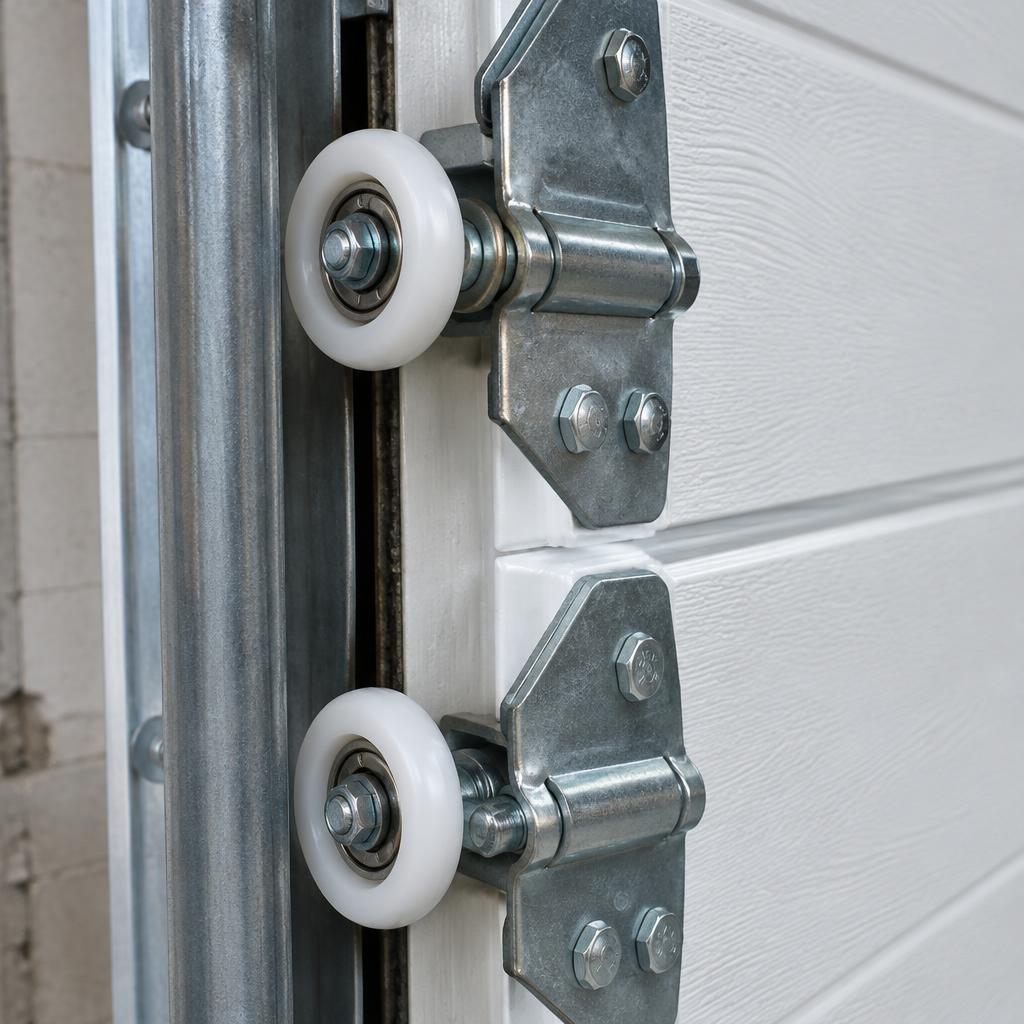
If your garage door is loud enough to wake the neighbours, worn rollers and hinges are usually to blame. We replace tired steel rollers with quiet nylon ball-bearing rollers and swap out cracked hinges and brackets, transforming how your door sounds and runs.
Common symptoms you'll see or hear
- ✔ Squeaking, rattling or grinding as the door moves
- ✔ Rollers wobbling, flat-spotted or not turning
- ✔ Cracked or bent hinges between panels
- ✔ Door shudders or jerks through the track
- ✔ Black dust or debris on the track from worn rollers
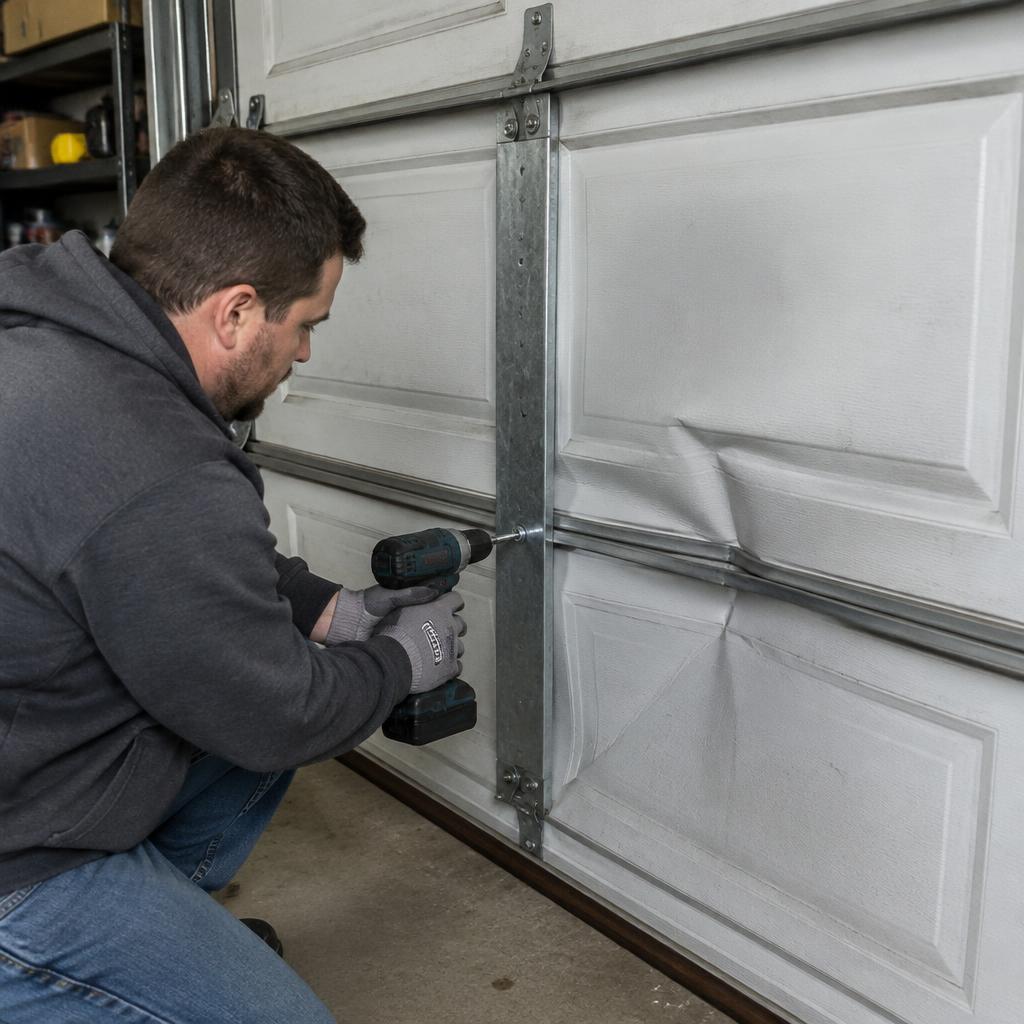
- ✔ Loose brackets at the top or bottom of the door
Why this failure happens
Rollers carry the door through its tracks thousands of times a year. Cheap steel rollers wear quickly, lose their bearings and start to drag, while plastic rollers can crack in Perth's summer heat. Once rollers drag, hinges flex and crack under the extra stress.
Worn rollers also make your motor work harder and can contribute to the door jumping the track.
How our technician repairs it on-site
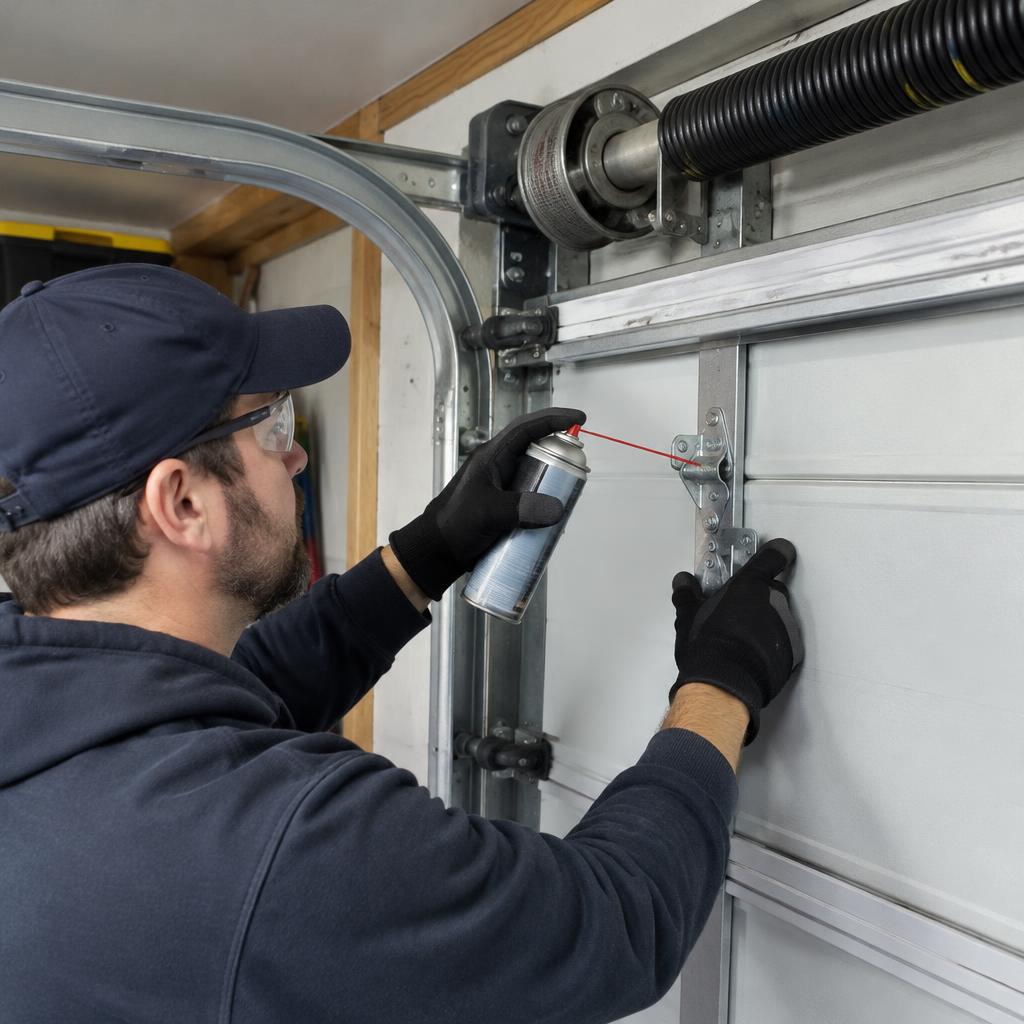
We inspect every roller, hinge and bracket, then replace worn parts with quality nylon ball-bearing rollers and heavy-duty hinges. Tracks are cleaned and the door is lubricated and balance-tested.
Most roller and hinge jobs are done in under an hour. You'll get an upfront price to approve before we start.
Frequently asked questions
Will new rollers make my door quieter?
Yes — nylon ball-bearing rollers are dramatically quieter than worn steel rollers.
Do you replace the bottom rollers?
Bottom rollers attach to the cable bracket, which is under tension. We handle these safely as part of the job.
How often should rollers be replaced?
Typically every 7–10 years, or sooner on heavily used doors.